



Notice: Function _load_textdomain_just_in_time was called incorrectly. Translation loading for the wpso-sort-order domain was triggered too early. This is usually an indicator for some code in the plugin or theme running too early. Translations should be loaded at the init action or later. Please see Debugging in WordPress for more information. (This message was added in version 6.7.0.) in /home/democxmp/staging.democracyworks.org.za/wp-includes/functions.php on line 6131
» Africa should stand up for Burundi  
Close

President Jacob Zuma’s wealth of experience in uncomfortable situations and strong-man crisis confrontation gives him appropriate experience for his new role: In a nod towards a visible foreign policy, the South African president has agreed to join the high level delegation of African presidents tasked with quelling the political violence in Burundi.

Appointed by the African Union, he joins the team of Presidents Macky Sall of Senegal, Mohamed Ould Abdel Aziz of Mauritania, Ali Bongo Ondimba of Gabon, and Prime Minister Hailemariam Desalegn of Ethiopia who together hope to be accepted for talks with the Burundian president.

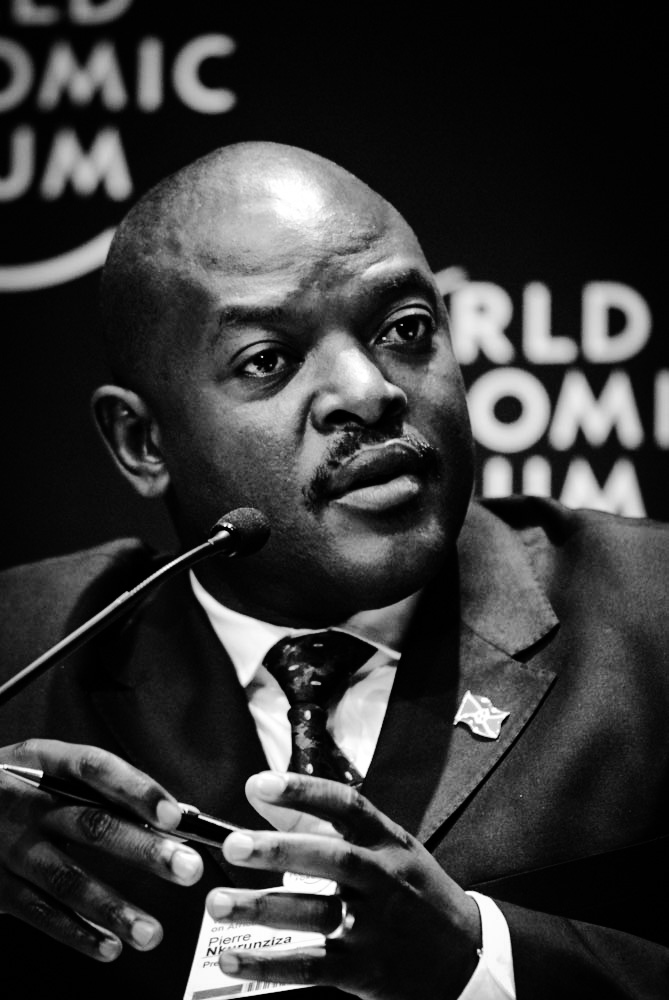
The issue at heart is that Burundi’s President Pierre Nkurunziza snatched an unconstitutional third term in office last year, predictably incensing the Burundian electorate and spawning an attempted coup and widespread crackdowns. The grim nature of shootings, dismemberings and stabbings in the capital and around the country by the state, and the reprisals by the communities targeted, have caused 240,000 people to take flight to Rwanda, Tanzania and beyond – routes the Burundian people are well used to travelling. The threat of civil war now looms large once more.

Little reported outside the continent, overshadowed perhaps by the 1 million person death toll borne by its neighbour Rwanda, the Burundian civil war from 1993 – 2005 between Hutus and Tutsis saw 300,000 lives lost. To put this in further context, a number that still makes it 100,000 people greater than the toll from the Balkan conflict in the 1990s.

Commentators have tried to allay fears by saying that the current crisis is political and not divided along ethnic lines, and it is to be hoped that it remains so, however Amnesty International have now published satellite images they believe to be of mass graves close to where killings in December took place. There is also credible, United Nations, evidence to suggest that Burundian refugees in Rwanda are being recruited and trained with the aim of ousting President Nkurunziza.

Although the origins of the crisis may have originated in Nkurunziza’s ‘third termism’; massive displacement, familiar feelings of terror and access to accurate information do not mean it will stay that way. In a country where virtually all free media has been shut down, rumours in refugee camps and villages spread like wildfire and there have already been reports of instances of hate speech re-emerging.

Perhaps President Zuma’s willingness to participate in the delegation is because he already understands that Burundi’s implosion once more into civil war has massive repercussions for the rest of the continent. Africa, and indeed the world, cannot manage another civil war. Such a scenario would mean:

  • Increased tensions, ethnic or otherwise, in neighbouring countries and a de-stabilising effect across the region.
  • Massive international funding required to support the displaced which is unlikely to be available given current humanitarian situations elsewhere.
  • Increased flows of asylum seekers across the continent, leading to increased strain on resources and perceived strains on informal labour sectors, perhaps, particularly in the South African context, leading to a reoccurrence of xenophobic violence.
  • The acute human suffering and shame, should another genocide taking place on the continent.

It would be very timely if Africa could halt this worsening situation in its tracks. There is also a growing movement on the continent at the movement to exit the ICC. The underpinning seems to be that certain African nations do not want the world’s policing or investigations into their war crimes and crimes against humanity to continue. If that is the case, then the AU needs to show the people of the continent, and mostly importantly these voiceless Burundians, that it can investigate crimes that take place on its soil effectively itself.

However attempts by the AU, along with those of the UN, have so far been rebuffed: UN Security Council envoys that flew in in January with offers of help to halt the violence were rejected by Nkurunziza, while an AU proposal to send in 5000 peacekeepers was labelled as an ‘invasion’.

Nkurunziza’s behaviour would indicate that he feels threatened and wants to be seen as a strong man impervious to offers of foreign assistance, particularly if it is un-African. His refusal to allow investigators in would also indicate he has something to hide and fits the profile of an isolationist leader who needs handling with the upmost care.

This high level delegation, if accepted by President Nkurunziza, must therefore find a way to convey the enormity of the crisis Burundi faces, and either advise Nkurunziza on how to save face and defuse the escalating tensions in his country, or step down. If they do not, the Burundian people slip further towards a violent future.

Major massacres in the country have already taken place in 1965, 1972, 1988, and 1993. The second poorest country in the world with a life expectancy of 50 years old; Burundi is a country already on its knees. Its people have little agency, no free press, virtually no free speech and a non-existent economy. Thousands of Burundians have been born in refugee camps in neighbouring countries, and will move through life without the education and skill to take on the running of their country, while others will have to live with the associated psychological traumas of witnessing mass killings and violence for the rest of their lives.

As neighbouring Yoweri Museveni extends his thirty years in office and Rwanda’s Paul Kagame tries to lift the cap on constitutional term limits, advice from a high level delegation to Nkurunziza to step down would also send a loud message against ‘third (or in Museveni’s case, infinite?) termism’. Experience tells us that the longer you leave people in power, the more autocratic they become and the less likely a democratic and peaceful transition to follow.

If accepted, Jacob Zuma and his team of African Presidents must make this high level delegation to Burundi an effective one. It is in the interests of the frightened Burundian people and the rest of the continent that they do.

*This article was published in SABC Online News. To view the article on their website click here

Related posts.

Policy Brief 30: IBSA-The challenge of building democracy and development

Introduction South Africa, Brazil, and India, the world’s three largest developing country democracies, have historical endowments which demand greater innovation,...

POST-ELECTION REFLECTION WORKSHOP WITH LESOTHO POLITICAL PARTIES

In October 2022, Lesotho held a general election to elect Members of the National Assembly. Like in any other elections,...

Introducing the CSO Capacity Building For Credible Local Elections (CAB4CLE) Angola

About CAB4CLE DWF is implementing the CSO Capacity Building for Credible Local Elections, known as the CAB4CLE project, in Angola...

Partnership Between Democracy Works Foundation  and the Financial Services Volunteer Corps
Partnership Between Democracy Works Foundation and the Financial Services Volunteer Corps

We are excited to announce a new partnership between Democracy Works Foundation (DWF) and the Financial Services Volunteer Corps (FSVC)...

Hosting Municipal Officials for a Knowledge Co-Creation Workshop On Climate Change

Following a successful Climate Change Champions Communications & Negotiations Workshop with Civil Society Organisations from the Northern and Western Cape...

Working Paper 16: Strengthening citizen agency through fostering self-love to boost democracy

Strengthening citizen agency through fostering self-love to boost democracy, development and collective healing in South Africa and Africa Introduction Victims...

Working Paper 15: Strengthening Democratic Morality to Undo Moral Breakdown

South Africa's overarching societal good moral values, whether set by democracy, culture, or religion, which govern individuals' behaviour, intimate spaces,...

Policy Brief 44: Civil Society, Citizens and Consumer Activism Crucial to Increase State-Owned Company Performance

Ordinary citizens, consumers, and civil society must play more active roles as shareholders of state-owned enterprises than is currently the...

Working Paper 14: African youth participation is crucial to building democratic societies

Among the greatest causes for African youth should be to defend democracy, deepen it and continuously breathe life in it....

Policy Brief 43: Democratising the Digital Economy

Introduction Digital technology, particularly Artificial Intelligence (AI), which has now become an integral part of our lives, can reinforce racism,...

President Jacob Zuma’s wealth of experience in uncomfortable situations and strong-man crisis confrontation gives him appropriate experience for his new role: In a nod towards a visible foreign policy, the South African president has agreed to join the high level delegation of African presidents tasked with quelling the political violence in Burundi.

Appointed by the African Union, he joins the team of Presidents Macky Sall of Senegal, Mohamed Ould Abdel Aziz of Mauritania, Ali Bongo Ondimba of Gabon, and Prime Minister Hailemariam Desalegn of Ethiopia who together hope to be accepted for talks with the Burundian president.

The issue at heart is that Burundi’s President Pierre Nkurunziza snatched an unconstitutional third term in office last year, predictably incensing the Burundian electorate and spawning an attempted coup and widespread crackdowns. The grim nature of shootings, dismemberings and stabbings in the capital and around the country by the state, and the reprisals by the communities targeted, have caused 240,000 people to take flight to Rwanda, Tanzania and beyond – routes the Burundian people are well used to travelling. The threat of civil war now looms large once more.

Little reported outside the continent, overshadowed perhaps by the 1 million person death toll borne by its neighbour Rwanda, the Burundian civil war from 1993 – 2005 between Hutus and Tutsis saw 300,000 lives lost. To put this in further context, a number that still makes it 100,000 people greater than the toll from the Balkan conflict in the 1990s.

Commentators have tried to allay fears by saying that the current crisis is political and not divided along ethnic lines, and it is to be hoped that it remains so, however Amnesty International have now published satellite images they believe to be of mass graves close to where killings in December took place. There is also credible, United Nations, evidence to suggest that Burundian refugees in Rwanda are being recruited and trained with the aim of ousting President Nkurunziza.

Although the origins of the crisis may have originated in Nkurunziza’s ‘third termism’; massive displacement, familiar feelings of terror and access to accurate information do not mean it will stay that way. In a country where virtually all free media has been shut down, rumours in refugee camps and villages spread like wildfire and there have already been reports of instances of hate speech re-emerging.

Perhaps President Zuma’s willingness to participate in the delegation is because he already understands that Burundi’s implosion once more into civil war has massive repercussions for the rest of the continent. Africa, and indeed the world, cannot manage another civil war. Such a scenario would mean:

  • Increased tensions, ethnic or otherwise, in neighbouring countries and a de-stabilising effect across the region.
  • Massive international funding required to support the displaced which is unlikely to be available given current humanitarian situations elsewhere.
  • Increased flows of asylum seekers across the continent, leading to increased strain on resources and perceived strains on informal labour sectors, perhaps, particularly in the South African context, leading to a reoccurrence of xenophobic violence.
  • The acute human suffering and shame, should another genocide taking place on the continent.

It would be very timely if Africa could halt this worsening situation in its tracks. There is also a growing movement on the continent at the movement to exit the ICC. The underpinning seems to be that certain African nations do not want the world’s policing or investigations into their war crimes and crimes against humanity to continue. If that is the case, then the AU needs to show the people of the continent, and mostly importantly these voiceless Burundians, that it can investigate crimes that take place on its soil effectively itself.

However attempts by the AU, along with those of the UN, have so far been rebuffed: UN Security Council envoys that flew in in January with offers of help to halt the violence were rejected by Nkurunziza, while an AU proposal to send in 5000 peacekeepers was labelled as an ‘invasion’.

Nkurunziza’s behaviour would indicate that he feels threatened and wants to be seen as a strong man impervious to offers of foreign assistance, particularly if it is un-African. His refusal to allow investigators in would also indicate he has something to hide and fits the profile of an isolationist leader who needs handling with the upmost care.

This high level delegation, if accepted by President Nkurunziza, must therefore find a way to convey the enormity of the crisis Burundi faces, and either advise Nkurunziza on how to save face and defuse the escalating tensions in his country, or step down. If they do not, the Burundian people slip further towards a violent future.

Major massacres in the country have already taken place in 1965, 1972, 1988, and 1993. The second poorest country in the world with a life expectancy of 50 years old; Burundi is a country already on its knees. Its people have little agency, no free press, virtually no free speech and a non-existent economy. Thousands of Burundians have been born in refugee camps in neighbouring countries, and will move through life without the education and skill to take on the running of their country, while others will have to live with the associated psychological traumas of witnessing mass killings and violence for the rest of their lives.

As neighbouring Yoweri Museveni extends his thirty years in office and Rwanda’s Paul Kagame tries to lift the cap on constitutional term limits, advice from a high level delegation to Nkurunziza to step down would also send a loud message against ‘third (or in Museveni’s case, infinite?) termism’. Experience tells us that the longer you leave people in power, the more autocratic they become and the less likely a democratic and peaceful transition to follow.

If accepted, Jacob Zuma and his team of African Presidents must make this high level delegation to Burundi an effective one. It is in the interests of the frightened Burundian people and the rest of the continent that they do.

*This article was published in SABC Online News. To view the article on their website click here

President Jacob Zuma’s wealth of experience in uncomfortable situations and strong-man crisis confrontation gives him appropriate experience for his new role: In a nod towards a visible foreign policy, the South African president has agreed to join the high level delegation of African presidents tasked with quelling the political violence in Burundi.

Appointed by the African Union, he joins the team of Presidents Macky Sall of Senegal, Mohamed Ould Abdel Aziz of Mauritania, Ali Bongo Ondimba of Gabon, and Prime Minister Hailemariam Desalegn of Ethiopia who together hope to be accepted for talks with the Burundian president.

The issue at heart is that Burundi’s President Pierre Nkurunziza snatched an unconstitutional third term in office last year, predictably incensing the Burundian electorate and spawning an attempted coup and widespread crackdowns. The grim nature of shootings, dismemberings and stabbings in the capital and around the country by the state, and the reprisals by the communities targeted, have caused 240,000 people to take flight to Rwanda, Tanzania and beyond – routes the Burundian people are well used to travelling. The threat of civil war now looms large once more.

Little reported outside the continent, overshadowed perhaps by the 1 million person death toll borne by its neighbour Rwanda, the Burundian civil war from 1993 – 2005 between Hutus and Tutsis saw 300,000 lives lost. To put this in further context, a number that still makes it 100,000 people greater than the toll from the Balkan conflict in the 1990s.

Commentators have tried to allay fears by saying that the current crisis is political and not divided along ethnic lines, and it is to be hoped that it remains so, however Amnesty International have now published satellite images they believe to be of mass graves close to where killings in December took place. There is also credible, United Nations, evidence to suggest that Burundian refugees in Rwanda are being recruited and trained with the aim of ousting President Nkurunziza.

Although the origins of the crisis may have originated in Nkurunziza’s ‘third termism’; massive displacement, familiar feelings of terror and access to accurate information do not mean it will stay that way. In a country where virtually all free media has been shut down, rumours in refugee camps and villages spread like wildfire and there have already been reports of instances of hate speech re-emerging.

Perhaps President Zuma’s willingness to participate in the delegation is because he already understands that Burundi’s implosion once more into civil war has massive repercussions for the rest of the continent. Africa, and indeed the world, cannot manage another civil war. Such a scenario would mean:

  • Increased tensions, ethnic or otherwise, in neighbouring countries and a de-stabilising effect across the region.
  • Massive international funding required to support the displaced which is unlikely to be available given current humanitarian situations elsewhere.
  • Increased flows of asylum seekers across the continent, leading to increased strain on resources and perceived strains on informal labour sectors, perhaps, particularly in the South African context, leading to a reoccurrence of xenophobic violence.
  • The acute human suffering and shame, should another genocide taking place on the continent.

It would be very timely if Africa could halt this worsening situation in its tracks. There is also a growing movement on the continent at the movement to exit the ICC. The underpinning seems to be that certain African nations do not want the world’s policing or investigations into their war crimes and crimes against humanity to continue. If that is the case, then the AU needs to show the people of the continent, and mostly importantly these voiceless Burundians, that it can investigate crimes that take place on its soil effectively itself.

However attempts by the AU, along with those of the UN, have so far been rebuffed: UN Security Council envoys that flew in in January with offers of help to halt the violence were rejected by Nkurunziza, while an AU proposal to send in 5000 peacekeepers was labelled as an ‘invasion’.

Nkurunziza’s behaviour would indicate that he feels threatened and wants to be seen as a strong man impervious to offers of foreign assistance, particularly if it is un-African. His refusal to allow investigators in would also indicate he has something to hide and fits the profile of an isolationist leader who needs handling with the upmost care.

This high level delegation, if accepted by President Nkurunziza, must therefore find a way to convey the enormity of the crisis Burundi faces, and either advise Nkurunziza on how to save face and defuse the escalating tensions in his country, or step down. If they do not, the Burundian people slip further towards a violent future.

Major massacres in the country have already taken place in 1965, 1972, 1988, and 1993. The second poorest country in the world with a life expectancy of 50 years old; Burundi is a country already on its knees. Its people have little agency, no free press, virtually no free speech and a non-existent economy. Thousands of Burundians have been born in refugee camps in neighbouring countries, and will move through life without the education and skill to take on the running of their country, while others will have to live with the associated psychological traumas of witnessing mass killings and violence for the rest of their lives.

As neighbouring Yoweri Museveni extends his thirty years in office and Rwanda’s Paul Kagame tries to lift the cap on constitutional term limits, advice from a high level delegation to Nkurunziza to step down would also send a loud message against ‘third (or in Museveni’s case, infinite?) termism’. Experience tells us that the longer you leave people in power, the more autocratic they become and the less likely a democratic and peaceful transition to follow.

If accepted, Jacob Zuma and his team of African Presidents must make this high level delegation to Burundi an effective one. It is in the interests of the frightened Burundian people and the rest of the continent that they do.

*This article was published in SABC Online News. To view the article on their website click here